
Data centers are buying jet engines.
Grid interconnection queues run for years. The fastest power to deploy behind the meter is an aviation engine on a skid — LM2500, LM6000, TM2500, SGT-A65, even converted CFM56 cores. They run at base load around the clock, and they need the same eyes an airline engine gets. We bring them.
Aviation cores we already know, in a different package.
LM2500
Descended from the CF6/TF39 family. The workhorse of marine and industrial power, now ordered by the gigawatt for campuses.
LM6000
A CF6-80C2 core adapted for power. Fast start, high efficiency, and a hot section we know from the widebody fleet.
TM2500
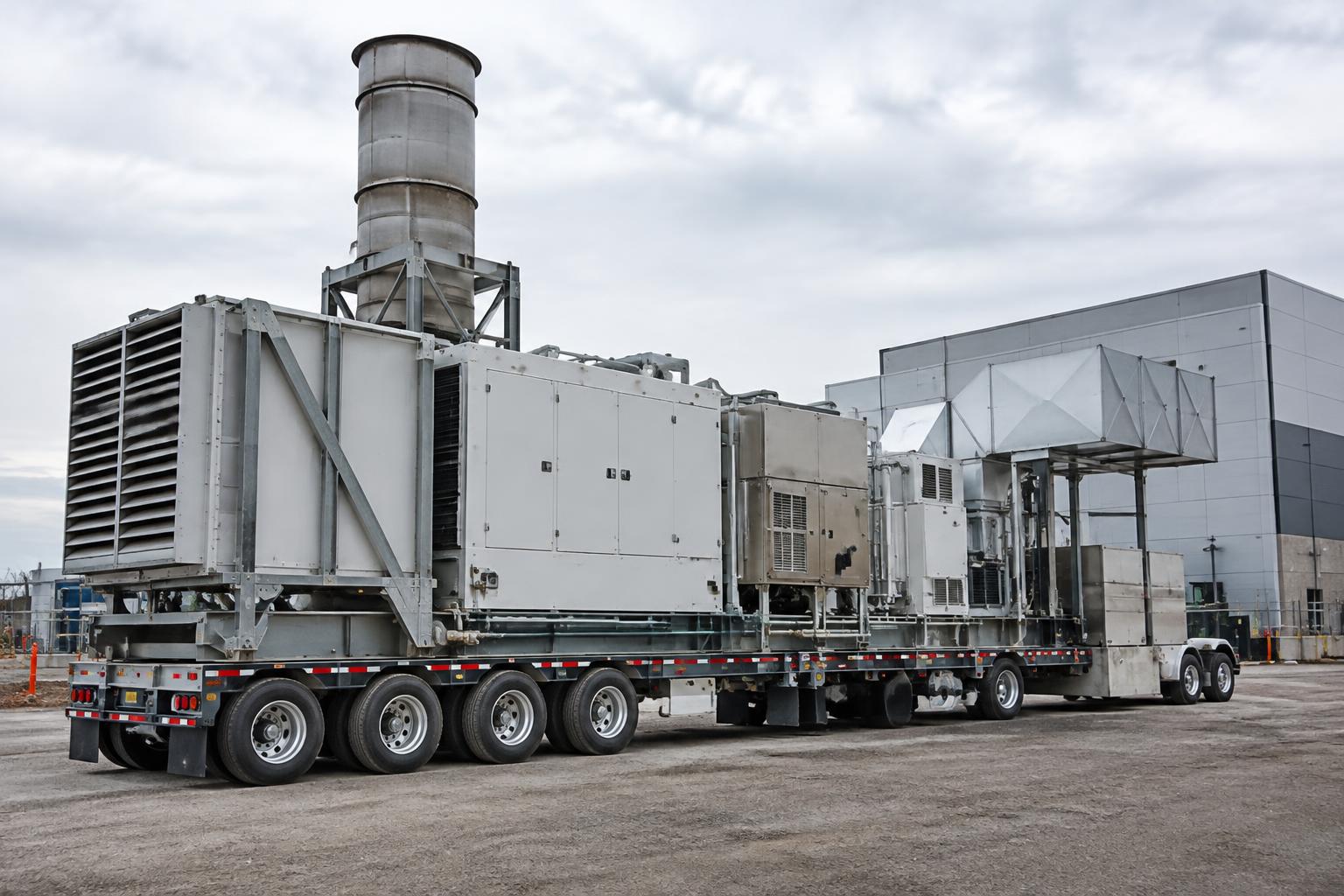
An LM2500 on a trailer. Running within weeks of arriving on site — which is exactly why it needs a baseline inspection.
SGT-A65
Trent-derived aeroderivative for larger blocks of behind-the-meter power.
CFM56 core
Retired narrowbody cores converted into gensets. The most common engine in the sky becomes the most familiar engine in the yard.
 AI illustration
 AI illustration
 AI illustration
Baseline it. Then watch the hot section.
Baseline at commissioning
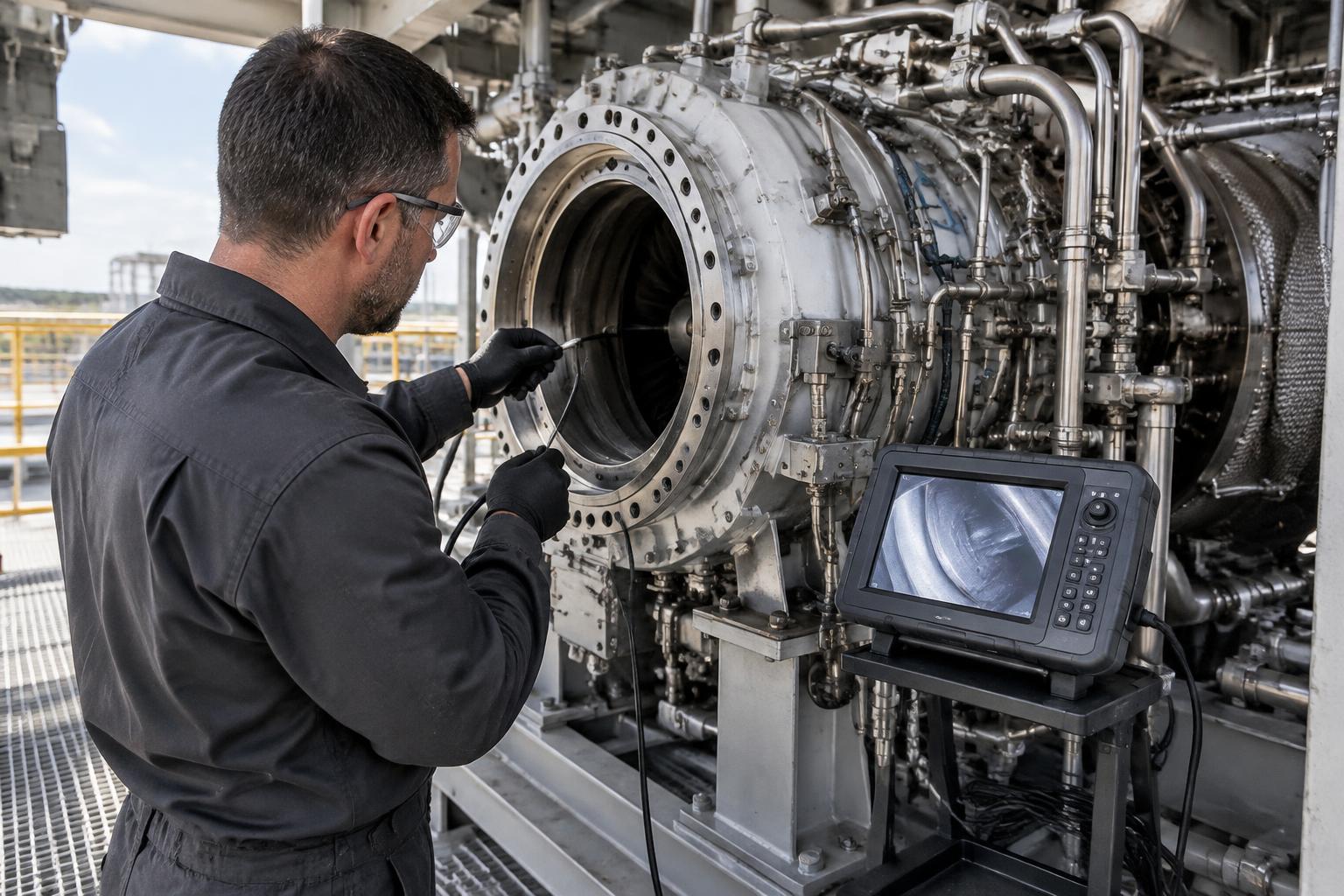
A full borescope before the unit goes to base load, so every later inspection has a reference and every warranty conversation has evidence.
Scheduled hot-section BSI
Combustor, HPT nozzles and blades indexed blade by blade and measured against the OEM manual limits with 3D measurement.
Cold section & GVI
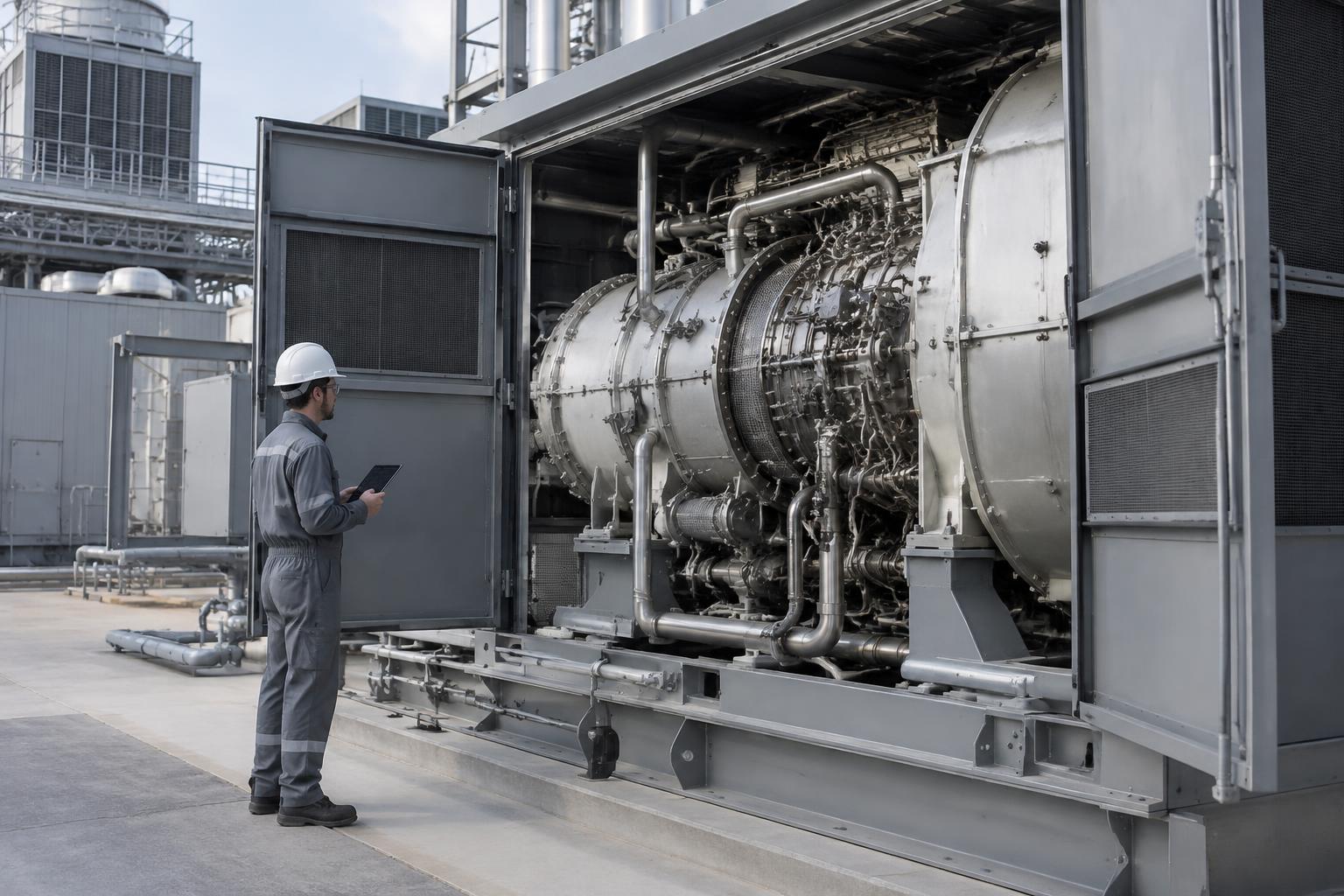
Compressor, inlet, package externals, lines and harnesses documented with photo evidence by zone.
Records, trends, runs
Records review, trend data between visits, and witnessing of performance runs against the contract minimums.
Reference documents are the OEM's industrial manuals and service bulletins. Access is through package doors and port covers. The engine does not know the difference; neither do our borescopes.
We have been inside these engines for years. Just with wings on them.
Same cores, same ports
An LM6000 hot section is a CF6-80C2 hot section. Our inspectors have been through those ports on wing for years.
Same tooling
Three generations of Waygate borescopes, turning tools and guide tubes travel with the inspector — no waiting for site equipment.
Same-day mobilization
Inspectors deploy from Miami to the plant the way they deploy to an airport: tell us the unit, the site and the date.
Same signed report
Drafted in InspectView, measured against the manual, signed by the inspector. Evidence a developer, lender or OEM can act on.
What developers and EPCs ask.
Do you inspect turbines at the data-center site?
Yes. We mobilize to the plant the same way we mobilize to an airport, with our own Waygate borescope kits and turning tools.
Which industrial turbines do you cover?
LM2500, LM6000, TM2500, SGT-A65 and converted CFM56 cores. Ask us about other aeroderivative models.
How often should a base-load unit be borescoped?
Per the OEM manual and operating hours — and because base-load units accumulate two to three times the annual hours of an airline engine, hot-section intervals come around faster. Baseline at commissioning, then scheduled hot-section inspections.
Can you set up a recurring program?
Yes. A baseline inspection at commissioning followed by scheduled hot-section borescopes, with trend data reviewed between visits.
Who is the typical client?
Data-center developers, EPC contractors, independent power producers, lenders and the OEM service network — anyone who needs independent evidence of condition.